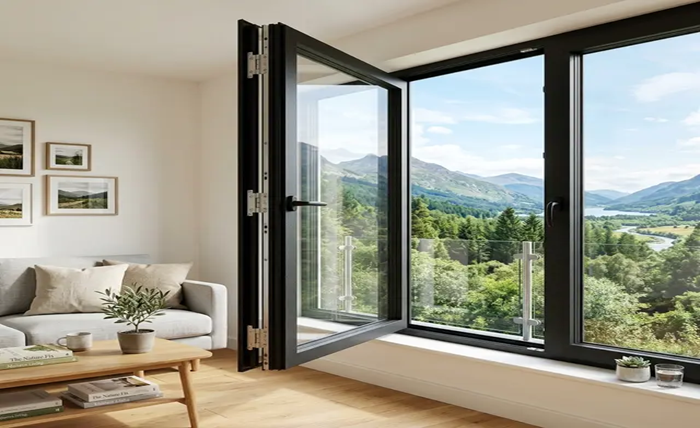
Look at where residential design is heading, and you’ll notice the walls are getting quieter and the glass is taking over. Homes are opening up, reaching for more light, more view, more connection to whatever lies outside. This shift didn’t happen on its own. It’s being enabled, quietly and steadily, by aluminium windows, the one component flexible and strong enough to let architects design the way they’ve long wanted to.
It’s worth understanding how this is playing out, because the windows going into homes today are a fair preview of where residential architecture is going next.
The Wall Is Giving Way to Glass
For most of building history, the wall came first, and the window was a hole cut into it. That logic is being turned on its head. In the homes shaping the future, glass is becoming the primary surface and the solid wall is what fills in around it.
Aluminium is what makes this possible. Its strength-to-weight ratio lets frames stay slim while carrying large panes, so a wall can become mostly glass without the structure looking heavy or the frames dominating the view. Eternia’s systems, built on Duranium, a special aluminium alloy Hindalco developed that’s 40% stronger than regular aluminium, push this even further, holding bigger panels on slimmer profiles than standard aluminium allows. The direction of travel is clear: more glass, less frame, and aluminium is the material carrying it there.
Slim Profiles Redefining Modern Window Design
The defining feature of modern window design is the vanishing frame. Homeowners and architects increasingly want windows that read as pure glass, where the structure holding it all up is barely there.
This is reshaping how homes look. Aluminium windows design has moved toward ever-slimmer sightlines, so the frame recedes and the view and the light take over. The difference between a chunky old profile and a slim modern one is dramatic across a full facade, and it’s this slimness that gives contemporary homes their clean, open, uncluttered character. As materials improve, frames keep getting thinner, and glass keeps getting more generous. That trajectory shows no sign of slowing.
Systems Thinking Over Individual Windows
Another shift shaping the future is a move away from windows bought piece by piece toward complete aluminium window systems designed to work together. Rather than fitting a slider here and a casement there, homes are increasingly built around a single coordinated system that runs throughout.
The advantage is coherence. When every opening shares the same frame profile, finish, and glass, the home reads as designed rather than assembled. It also means consistent performance across the house, the same sealing, the same strength, the same reliability at every window. Premium aluminium windows built as a system let architects treat the whole envelope as one considered decision, and that systems-led thinking is fast becoming standard in serious residential design.
Versatility for Every Room
The future of residential architecture is also about matching the right window to the right space, and aluminium’s versatility makes this straightforward. A single system can span the full range a home needs.
Aluminium sliding windows suit wide openings and living spaces, opening a room to a balcony or garden without eating floor space. Aluminium casement windows bring controlled ventilation and tight sealing to bedrooms and studies, swinging open to catch a breeze and shutting firmly against the weather. An aluminium fixed window handles the pure view, no moving parts, maximum glass, ideal for framing a landscape or brightening a stairwell. Being able to draw all of these from one system, in one visual language, is what lets architects compose a home rather than just glaze it.
Opening Homes to the Outdoors
Perhaps the strongest current in residential architecture is the dissolving line between inside and out, and aluminium is central to it. Nowhere is this clearer than in the rise of lift and slide doors, which let entire sections of wall open onto a terrace or garden.
The mechanism lifts the panel off its seals to glide open, then lowers it to seal tight when closed, so even large, heavy panels move easily while still holding up to the weather. Eternia’s systems here are WiWA certified for wind resistance up to 2.75kPa, water tightness up to 750Pa, and air sealing up to 600Pa, the certified performance that makes wall-sized glass openings genuinely viable in Indian conditions. As homes increasingly blur the boundary with the outdoors, these systems are becoming a defining feature rather than a luxury flourish.
Built for Indian Conditions and Built to Last
The future of any building material rests on how well it endures, and this is where aluminium quietly makes its strongest case. Homes are being designed to last, and windows are expected to keep performing across decades of monsoons, summers, and coastal air.
Aluminium doesn’t warp, swell, rot, or attract termites the way timber does, and it resists the corrosion that troubles other materials in humid and coastal settings. A well-made aluminium window holds its shape and its seal for years, which is exactly what architects designing for the long term need. Duranium, engineered for Indian conditions, takes this further, and Eternia backs its systems with a 12-year warranty on profiles and 5 years on hardware, the kind of assurance that reflects genuine confidence in how long these windows go on performing.
The Shape of Things to Come
Put it all together, and a clear picture emerges. Residential architecture is heading toward homes that are lighter, more open, more connected to the outdoors, and more coherent in their design. Walls of glass, slim frames, coordinated systems, seamless indoor-outdoor transitions, and long-lasting performance, these are the features defining the next generation of homes.
Aluminium windows aren’t just keeping up with this shift. They’re the thing making it possible. The strength that allows slim frames, the versatility that suits every room, the durability that holds up for decades, all of it is what lets architects design the open, light-filled homes people increasingly want. As that vision keeps advancing, aluminium will keep shaping it, quietly determining not just how our windows look, but how our homes feel to live in for years to come.